
If you’ve ever wondered whether reading on a Kindle feels the same as reading a “real” book, you’re not alone. Many readers ask this exact question before switching to digital reading.
Is Kindle better than physical books? Or is it just… different?
The truth is, it’s not a simple yes or no. It depends on your lifestyle, your reading habits, and what you personally enjoy about books. Let’s break it down.
Kindle vs Physical Books: What Really Feels Better?
Reading is a deeply personal experience. Some people love the speed and convenience of a Kindle, while others can’t imagine giving up the feel of a printed book.
To understand the difference, let’s look at what readers like about Kindle and where physical books still shine.
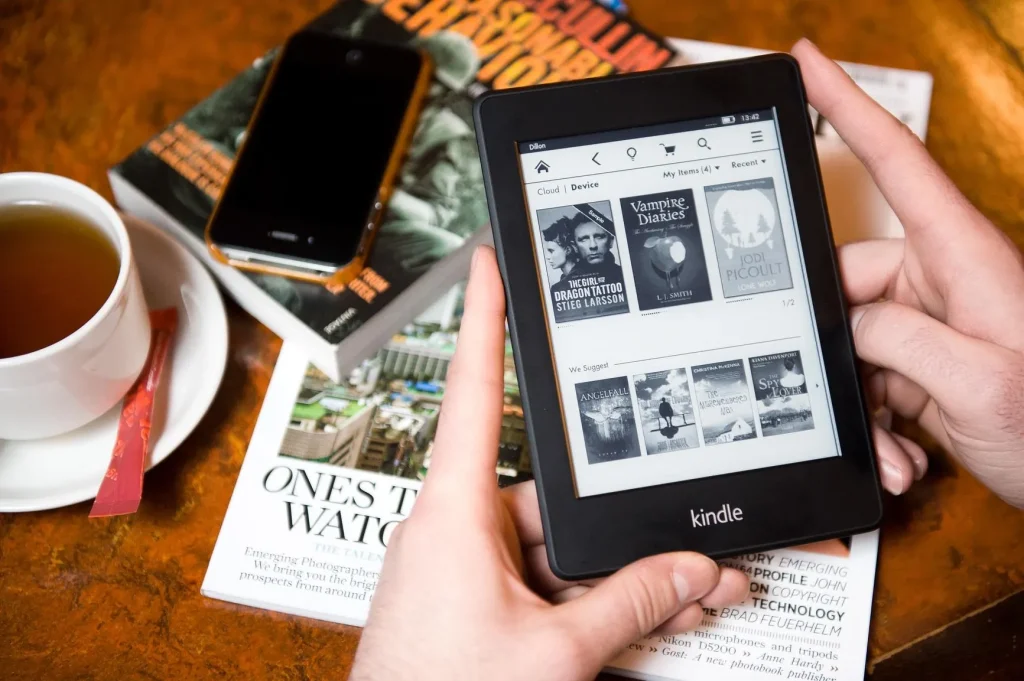
What Readers Like About Using Kindle
Instant Access & Portability
With Kindle, you can buy a book and start reading within seconds. No waiting. No shipping.
• Carry hundreds or thousands of books in one device
• Perfect for travel, commuting, or reading anywhere
• No heavy bags full of books
Customizable Reading Experience
Kindle lets you control how you read:
• Change font size and style
• Adjust background light
• Highlight, bookmark, and use the built-in dictionary
• Increase comfort for night reading or weak eyesight
This makes Kindle especially popular with long-time readers and older users.
Syncing Across Devices
Start reading on your Kindle, continue on your phone, finish on your tablet.
Kindle remembers where you stopped
Your highlights and notes sync automatically
That kind of flexibility is hard to beat.
How Reading on Kindle Differs from a Physical Book
The Feel of a Real Book
A physical book gives you:
• The weight in your hands
• The sound of turning pages
• The smell of paper and ink
For many book lovers, this sensory experience is part of the joy of reading.
Reading Rituals and Focus
With print books, you might:
• Flip back and forth between pages
• Mark corners
• See your progress physically
With Kindle, everything looks uniform. Some readers feel that the ritual of reading is missing.
Ownership and Longevity
When you buy a physical book:
You own it forever
You can lend it
Display it on shelves
With Kindle, you’re buying a license inside Amazon’s ecosystem. That can feel less permanent to some readers.
Distraction & Reading Mindset
Kindle devices themselves are focused on reading, but if you use the Kindle app on your phone or tablet:
• Notifications can distract you
• You may switch apps more easily
• Your brain stays in “digital mode.”
With a physical book, many readers say they naturally slow down and focus better.
Which Format Is Right for You?
Ask yourself:
• Do I travel or commute often? → Kindle fits best
• Do I love collecting and displaying books? → Print wins
• Do I read in bed or low light? → Kindle is easier
• Do I love the feel of pages and covers? → Physical books shine
Most readers don’t choose just one.
They use Kindle for convenience
And print for special or favorite books
Final Take: Kindle or Physical Books?
Kindle and physical books both have a place in a reader’s life.
Kindle = Speed, portability, flexibility
Physical books = Emotion, ritual, ownership
So yes—you might love using Kindle.
But yes—it is different from reading a real book.
And that’s okay.
What matters most is that you keep reading in the way that fits your life.
FAQs: Kindle vs Physical Books
Is reading on Kindle better than reading a physical book?
It depends. Kindle is better for travel, night reading, and carrying many books. Physical books are better for readers who love the feel and ritual of print.
Does Kindle feel the same as a real book?
No. Kindle offers a smooth digital experience, while physical books provide a tactile and emotional connection.
Is Kindle good for long reading sessions?
Yes. Kindle e-ink screens are designed to reduce eye strain and feel similar to paper.
Can I focus better with a Kindle or a physical book?
Many readers focus better with print. However, a dedicated Kindle device also limits distractions compared to phones.
Is Kindle cheaper than buying physical books?
Often yes. Kindle eBooks are usually cheaper, and many free or discounted titles are available.
Whether you read on Kindle or love physical books, what matters is that you stay connected to reading.
If you’re ready to publish, grow your audience, or build your author brand, connect with us today, and let’s turn your reading journey into a writing success story.


